


How to choose a bird feeder? A practical guide to attracting the right birds
Have you ever wondered why some bird feeders attract a wide variety of birds while others seem empty or are dominated by squirrels? Choosing the right feeder is key to fully enjoying bird watching, whether you live in the city, suburbs, or countryside in Quebec.
Each type of feeder meets specific needs: species to attract, the environment you live in, and the level of protection against intruders like squirrels or large birds. Here's a practical guide to help you make the right choice.
First and foremost, you need to determine which species you wish to invite to your feeder:
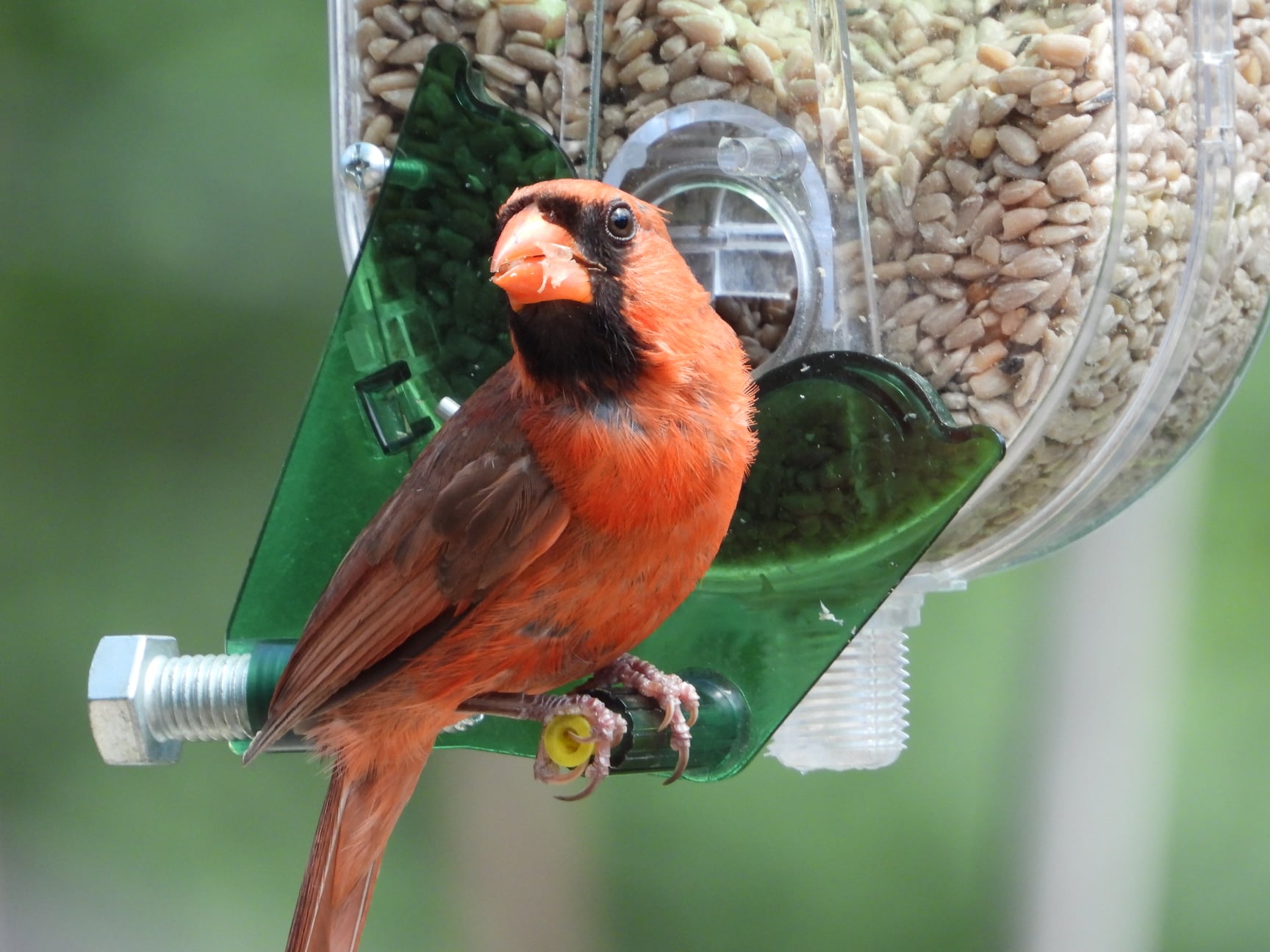 Northern Cardinal
Opt for a feeder designed specifically for the cardinal.
Its ingenious gate system is calibrated according to the specific weight of this species: it automatically closes if a bird that is too light or too heavy tries to access it, thus preventing other species from feeding there.

For a wider variety of birds
Choose an anti-squirrel sunflower feeder.
A premium product for peaceful bird feeding
Fully adjustable by weight, this feeder easily excludes larger birds.
As soon as a squirrel climbs on, its weight causes the shield to drop and instantly blocks the feeding ports, without ever harming the animal.
All parts likely to be chewed are made from ultra-durable materials.

Goldfinches and small birds
A thistle feeder is THE best option if you want to offer energy-rich food while only attracting small birds.
Thistle is a tiny seed that only small birds are able to handle efficiently with their fine beaks.
The holes in the feeder are very small, which matches the size of finch beaks, while preventing larger birds (and squirrels) from wasting or stealing the food.
The small perches are difficult for heavier birds to access, but perfect for delicate species, and if they are inverted, only goldfinches (skilled at eating upside down) will be able to feed, thus excluding house sparrows.

Woodpeckers, chickadees, nuthatches, and other insectivores
Compacted nut cylinders installed on their holder are very popular and quickly gaining popularity among our customers.
These species enjoy feeding by clinging vertically. The cylinder offers them a surface they can "climb" to peck, just as they would on a tree trunk.
Since the food is compacted, no seeds fall to the ground, which prevents mess and attracts fewer undesirables.
The result: a clean, durable, and very attractive feeder for climbing birds.

Black-capped Chickadee only
The selective chickadee feeder, with two small openings, allows the bird to enter, grab a seed (black oil sunflower is generally recommended), and exit through another hole.
Ideal if you want to avoid mess on the ground or limit visitation to this one species.

Blue Jay: the peanut wreath will be very appealing to it.
Caution: Use a squirrel baffle to protect the food.
By placing this feeder away from others, you will prevent the blue jay from chasing away smaller birds.
The diversity of observable species depends heavily on your location.
For example, the Northern Cardinal prefers semi-open and suburban environments. It will be more difficult to attract it in dense forests or very wooded areas. You might see it in the city, but rarely in the mountains or in the immediate vicinity of a park. If you live near a mixed forest, it is more likely that the Rose-breasted Grosbeak might visit your cardinal feeder.
No problem! A sunflower tube feeder with a tray will prevent seeds from falling onto your downstairs neighbor's balcony.
A pole with a clamp, attached to the balcony railing, combined with a 16-inch "twist" hook, allows for easy hanging of the feeder.
Window feeders with suction cups are perfect when space is limited or for high-rise dwellings. Just make sure a squirrel can't reach it... and enjoy close-up bird watching!
Several models claim to be "squirrel-proof," but not all are effective. Here are our recommendations:
Squirrel Buster Plus (and its variants: Classic, Standard, Finch, Peanut+)
Principle: under the squirrel's weight, the openings automatically close. Lighter birds can feed without problems.

Large 15-inch dome blocking squirrels. The adjustable central rod limits access for large birds: by lowering the dome, only smaller birds can feed.
The most amusing feeder! As soon as a squirrel lands on the circular perch, a rechargeable mechanism starts spinning and propels it to the ground. Spectacular and very effective... for lovers of comical scenes!
They let small birds (chickadees, woodpeckers, nuthatches, goldfinches) in but block large ones (starlings, grackles).
Caution: in forested areas, the smaller red squirrel can sometimes get through.
Choosing the right feeder means considering:
- the desired species,
- your environment (city, suburbs, forest, balcony...),
- whether or not an anti-squirrel device is needed.
Need advice tailored to your situation?
We would be happy to guide you in setting up your ideal feeding station.